

How do ceramic-lined pipes compare economically with traditional piping systems?
Pipeline wear has long plagued many companies transporting highly abrasive materials such as ore, coal, fly ash, and cement. While traditional carbon steel or alloy steel pipes offer a low initial investment, their service life is limited in high-impact, high-wear environments, and frequent replacement and repairs increase overall operating costs. In recent years, ceramic-lined pipes have gradually become a new industry choice, with their economic advantages becoming increasingly apparent.
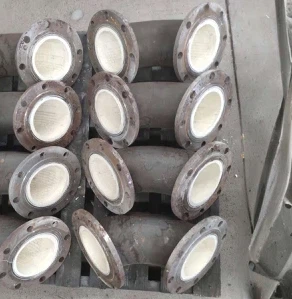
Extended Service Life
Conventional pipes typically only last a few months to a year under the long-term impact of highly abrasive media. Ceramic-lined pipes, on the other hand, offer wear resistance dozens of times greater than steel pipes. The high-hardness alumina ceramic lining effectively resists particle impact and abrasion, extending the pipe's service life to several years or even longer. This significant increase in service life means companies can significantly reduce downtime associated with frequent pipe replacements.
Reduced Maintenance Costs
Conventional pipes require regular inspection and replacement, resulting in high maintenance costs and significant downtime. Ceramic-lined pipes require virtually no maintenance during operation, significantly extending maintenance intervals and reducing the combined costs of labor, materials, and production downtime. This advantage is particularly important for conveying systems that require long, continuous operations.
Overall Cost-Effectiveness
From a procurement perspective, the initial investment in ceramic-lined pipes is higher than that of traditional steel pipes. However, from a lifecycle perspective, ceramic-lined pipes offer greater economic benefits. Their longer service life and lower maintenance costs significantly reduce the long-term cost per ton of material conveyed. Many companies have achieved a return on their initial investment within 3-5 years by adopting ceramic-lined pipes, with ongoing cost savings thereafter.
Production Efficiency and Safety
Frequent equipment replacement not only increases costs but also impacts production efficiency. Ceramic-lined pipes are wear-resistant and corrosion-resistant, reducing unplanned downtime in conveying systems and improving production stability and continuity. Furthermore, the smooth interior of the pipe reduces material buildup and blockages, further improving conveying efficiency and safety.
Compared to traditional piping systems, ceramic-lined pipes offer significant economic advantages. By extending service life, reducing maintenance costs, and improving production efficiency, it achieves a long-term return of "high investment, low operating costs." For high-wear industries such as mining, cement, electricity, and metallurgy, choosing ceramic-lined pipes is not only an upgrade in wear-resistant materials, but also an important way for companies to reduce overall costs and enhance market competitiveness.


