But sometimes, more structure is needed than random packing can provide. In this case, structured packing is necessary.
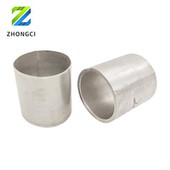
Structured packing is an ordered packing used to direct liquid materials into a specific shape. It uses discs made of materials such as metal, plastic or ceramic with internal structures arranged into different types of honeycombs. These honeycombs are usually located inside a cylinder.
The structured packing cylinders are carefully designed to provide a large surface area for liquid contact without creating resistance that would hinder the flow of liquid.
How structured packing works
With structured packing, liquid is forced into a specific, predetermined arrangement within the column. There are different types of structured packing available.
Instead of using many small pieces of material, structured packing consists of large pieces of material. This material contains holes, grooves, corrugations and other textural elements that increase surface area and contact capabilities. Structured packing, especially the old-style structured packing, is usually made of metal plates, but can also be made of plastic, porcelain, wire mesh and other materials. Plastics are particularly useful in applications involving corrosive liquids.
Structured packing is used in processing plants to package and store liquids. It is particularly useful in offshore applications, such as offshore drilling, because the increased liquid dispersion helps to offset the effects of constant motion in offshore plants.
Here are a few different types of structured packing:
1. Braided wire structured packing
Braided packing consists of numerous tiny metal wires, which have a large surface area and efficient mass transfer. Braided packing can be made into other shapes, such as rolled into a cylinder or wound into a solid block.
2. Gauze
Gauze is suitable for applications that require the lowest possible pressure drop. It is ideal for handling pharmaceuticals and other chemicals that require a specific temperature range.
3. Corrugated structured packing
Metal plate is often used in applications such as vacuum distillation and high-pressure absorption. Because it is stronger and more durable than knitted packing and gauze, it can handle large amounts of liquids and vapors. When necessary, the solid metal plate can be pressed into a smooth thick grid. The advantage of corrugated grid metal plate is that its smooth, open surface has a certain resistance to chemical contamination. This property makes these types of packing ideal for wastewater and other environments prone to contamination.
Advantages of structured packing
In tower packing, creating opportunities for liquid and vapor to contact is critical. One of the best ways to accomplish this is to use packing that spreads the liquid into a thin film. This configuration increases contact and improves performance. Some types of structured packing have additional textures designed to increase liquid dispersion. Liquid dispersion is especially important in low-pressure applications, as internal pressure alone cannot be relied upon to disperse the liquid.
Structured packing generally has a lower pressure drop than random packing and can handle larger flow rates, making it useful in situations with very low pressures or very high flow rates. This lower pressure drop, in turn, provides several other benefits. It allows for higher volatility, which is helpful for more difficult separation processes. It can also improve energy efficiency and reduce foaming.
These packings also increase efficiency and can pack more volume due to their tightly organized internal structure. The higher the capacity of structured packing, the higher the run rate.